
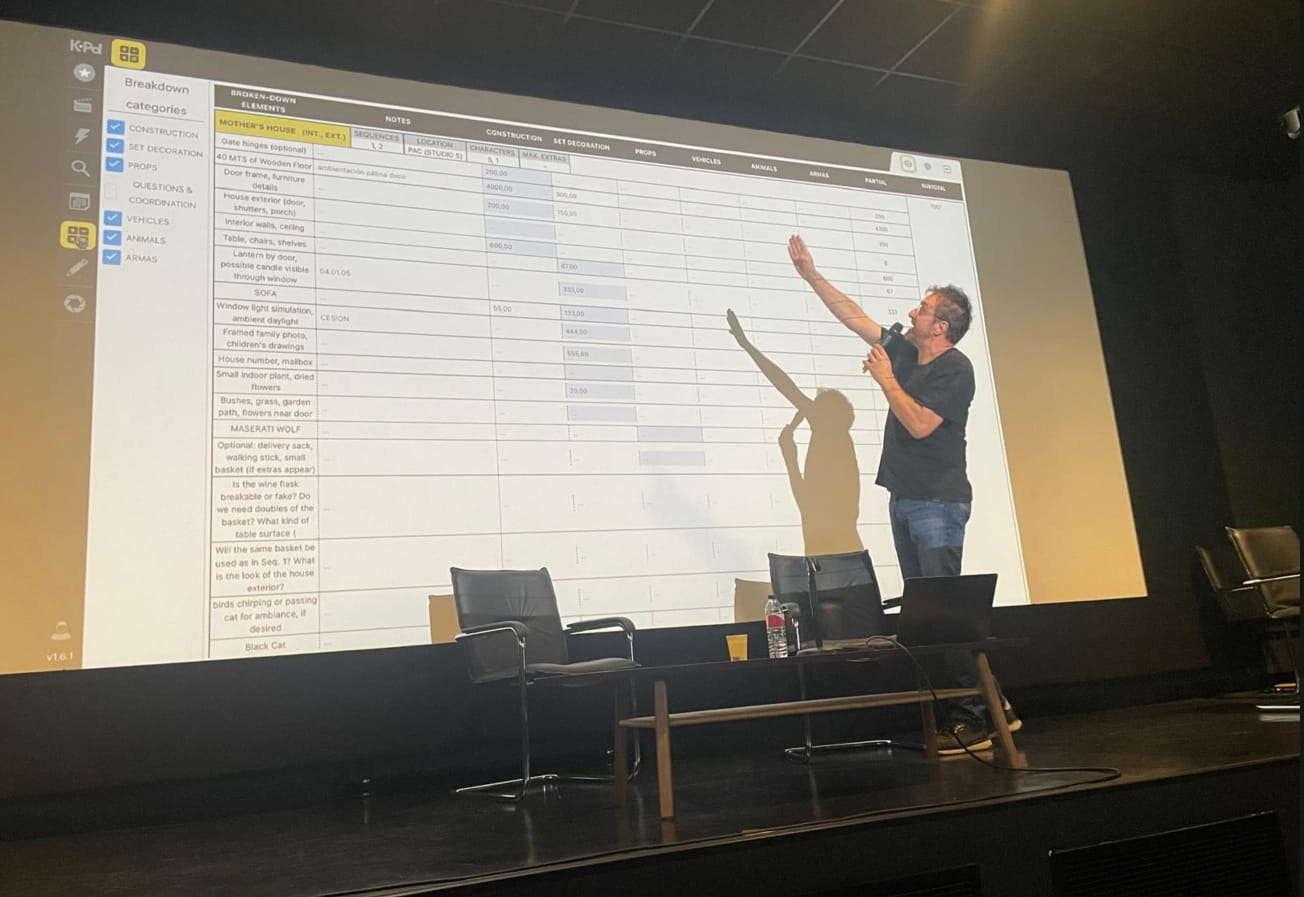
On October 22, Keynema’s CEO Mani Martínez gave a hands-on session at the ECAM, Universidad de Cine y Audiovisuales de Madrid (talk in Spanish), showing how Keynema automates production-design logistics while keeping creative decisions firmly in human hands. The focus was practical: real workflows, versioning, and how changes ripple through a project without Excel pain.
Live demo – what we showed
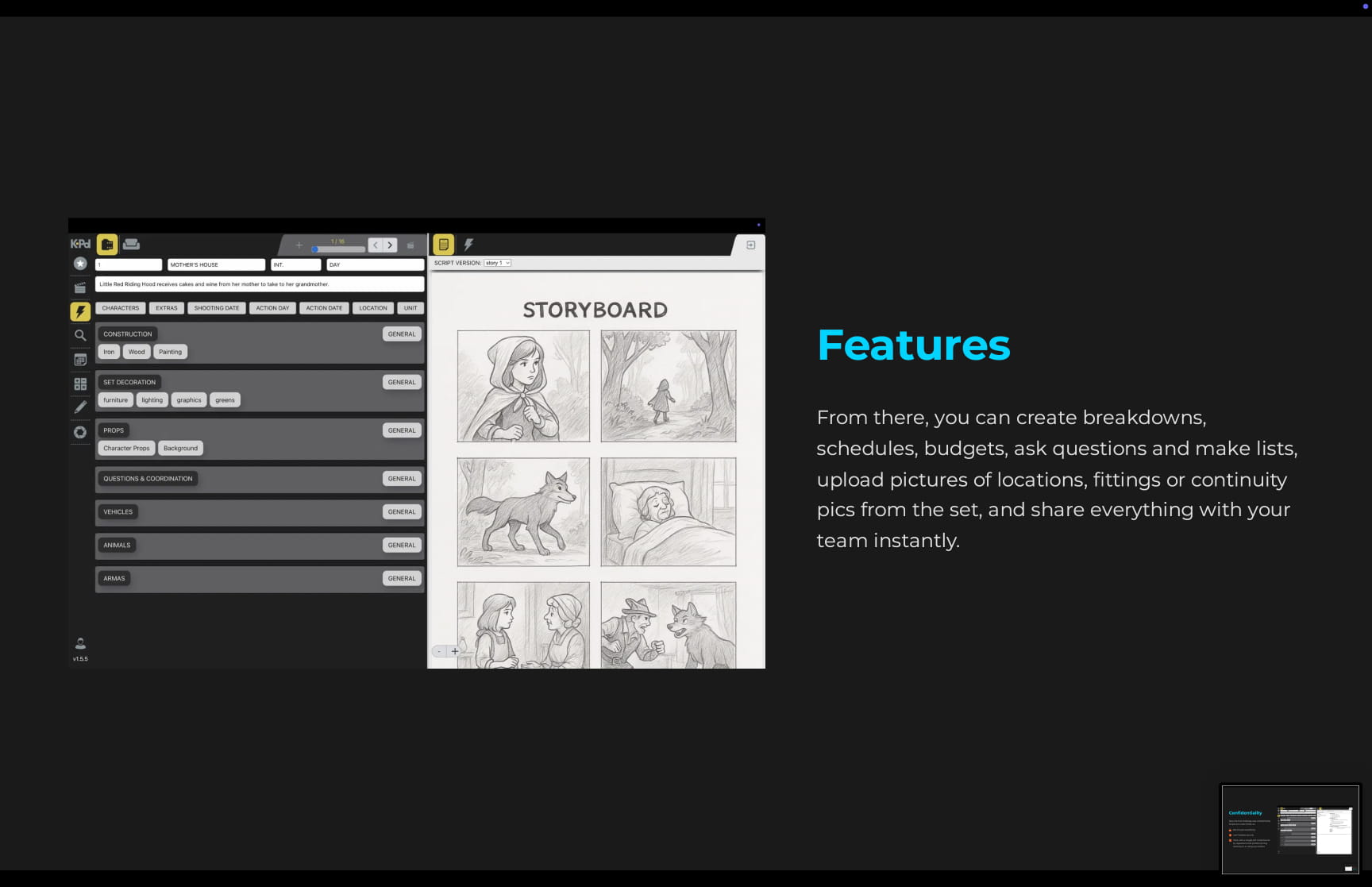
The session opened with a live script analysis. Keynema reads a screenplay and generates the outlist in minutes—scenes, sets, characters per scene, page-eighths, INT/EXT, and day/night—all organized in a database rather than static documents. From there, attendees saw how different roles work differently: art directors break down by sets, prop teams by sequences, using custom categories without duplicating effort.
We also demonstrated smart Boolean-style searches (like “scenes with Wolf + kitchen props”) that replace sprawling Day-Out-of-Days tables with precise working lists. Everything feeds into a single source of truth: breakdown items connect directly to calendar views, budget tables with subtotals per set or character, and continuity or location-photo records.
A concrete problem Keynema solves
Consider a costume designer managing 15 characters across 80 scenes. Before Keynema, each script revision meant six hours updating look charts and Excel sheets. With Keynema, a new draft is analyzed and diffed automatically—affected scenes are flagged, lists update in minutes. Creative choices (styles, fabrics, aging) remain human; the system just automates the structure.
What Keynema does under the hood
Keynema uses encrypted, chunked script analysis to prevent hallucinations and ensure NDA-safe processing. Data entered once can be reused across views—set-centric for art departments, sequence-centric for props or costume. When a new draft arrives, version control highlights added, removed, or renumbered scenes while preserving previous breakdown work. Breakdown categories feed into budget columns with automatic subtotals, everything exportable to Excel or PDF. Field features include uploading location or continuity photos with on-site annotations that sync with script data once the cloud version launches. So far, Keynema has been tested in over 30 productions across art, props, and costume departments.
Q&A – what people asked
The audience pressed on authorship versus automation. Keynema automates information, not interpretation—material and creative decisions always stay with the designer. When asked about implied elements, we clarified that the app doesn’t “imagine” unseen props; those remain part of the creative breakdown, ensuring no loss of control.
Other questions covered practical concerns: Can designers work by set while prop teams break down by sequence? Yes, both workflows coexist seamlessly within the same project. What happens with new drafts? Automatic diff comparison prevents data loss and keeps human annotations intact. How do you share projects offline? Files can be passed selectively—share only the outlist, breakdown, or budget as needed—while the upcoming cloud version will enable real-time multi-user collaboration.
The same principles apply in education, where Keynema is used at ESCAC to teach workflows under ethical and legal frameworks.
What’s next for Keynema
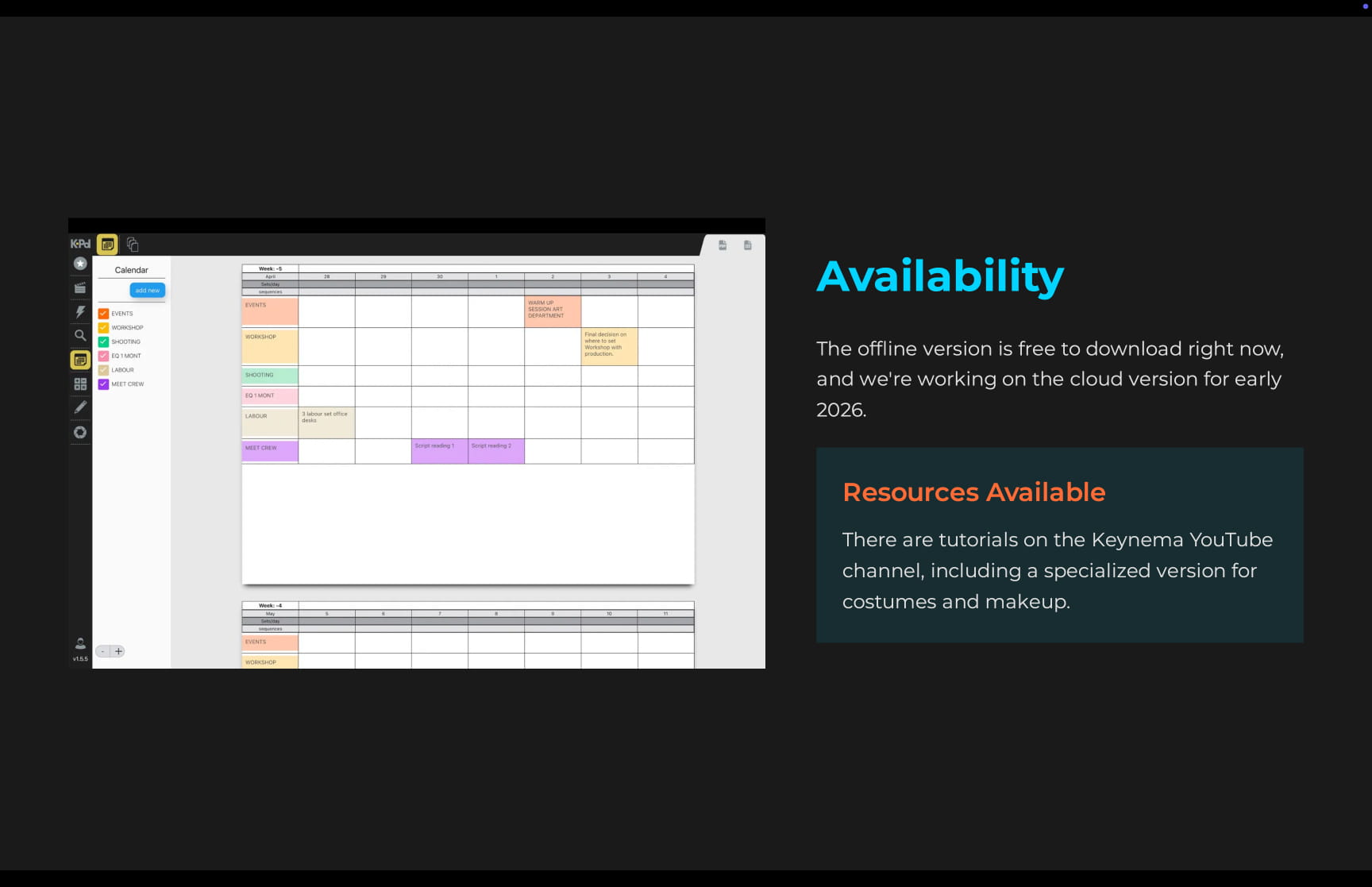
The offline version is available now and free to download. The cloud version—designed for cross-department, real-time collaboration—is on track for release in the first third of 2026. You can also find a full collection of step-by-step tutorials on the Keynema YouTube channel, where each module of the app is demonstrated in depth.
See Keynema in action and download the offline version at keynema.com.